January 12, 2026 · 13 min read
Is it a Pandora's Box or the solution we've been waiting for?
Either way, the toothpaste is out of the tube. On January 10, 2026, Anthropic announced Claude for Healthcare, a comprehensive suite of AI tools designed to integrate with medical records, automate administrative workflows, and help patients understand their own health data. This announcement came just days after OpenAI unveiled ChatGPT Health. The two largest AI companies in the world have now formally staked their claims in healthcare, and the rest of us need to figure out how to manage what comes next.
This is not a moment for blind optimism or reflexive fear. Both responses miss the point. The technology is here, it is improving rapidly, and it will reshape how healthcare operates whether we embrace it thoughtfully or ignore it entirely. The question is not whether AI will touch your health record. The question is whether we will shape that interaction or let it shape us.
What Actually Happened This Week
Anthropic's announcement, timed to coincide with the J.P. Morgan Healthcare Conference, covers two major domains. For clinical operations, Claude is now built for prior authorization processing, claims appeals automation, and care coordination workflows. For life sciences, Anthropic has established integrations with Medidata, ClinicalTrials.gov, bioRxiv, Open Targets, and ChEMBL, with partnerships already in place with AstraZeneca, Sanofi, Banner Health, Flatiron Health, and others.
On the consumer side, U.S. subscribers to Claude Pro and Max can now connect their personal health records through HealthEx, Function Health, Apple Health, and Android Health Connect. When connected, Claude can summarize medical history, explain test results, detect patterns across health metrics, and help prepare questions for doctor visits.
The optimist's view: This could democratize access to health information interpretation. Patients who have always felt lost navigating complex medical systems now have a tool that can synthesize their records, explain what things mean in plain language, and help them advocate for themselves. Clinicians drowning in administrative burden, spending 15.5 hours per week on paperwork according to the American Medical Association, might finally get relief.
The skeptic's view: We are handing our most sensitive personal information to AI systems that hallucinate, that we do not fully understand, and that are built by companies whose primary obligation is to shareholders, not patients. The Change Healthcare breach in 2024 exposed 100 million Americans' records. Now we are voluntarily feeding even more data into these systems.
The pragmatist's view: Both perspectives contain truth. The path forward requires holding them in tension rather than choosing sides.
The Promise for Clinicians
Practicing clinicians spend an inordinate amount of time on prior authorization. Every plan of care requires justification. Every request for additional visits demands documentation that proves medical necessity to payers who have financial incentives to deny claims. A study published in Health Affairs found that physician practices spend an average of $31 billion annually on prior authorization activities alone.
If these tools work as advertised, we could see a fundamental shift in how clinical professionals spend their time. Banner Health reports that 85% of its 22,000+ providers are working faster with higher accuracy using Claude. Novo Nordisk claims clinical documentation timelines dropped from 12 weeks to 10 minutes for certain tasks.
But here is where healthy skepticism enters. Those numbers come from Anthropic's marketing materials and early adopter testimonials. Independent verification of these claims does not yet exist. The healthcare industry has a long history of technology promises that failed to deliver, from electronic health records that were supposed to improve efficiency but often made documentation more burdensome, to telehealth platforms that struggled with adoption and reimbursement.
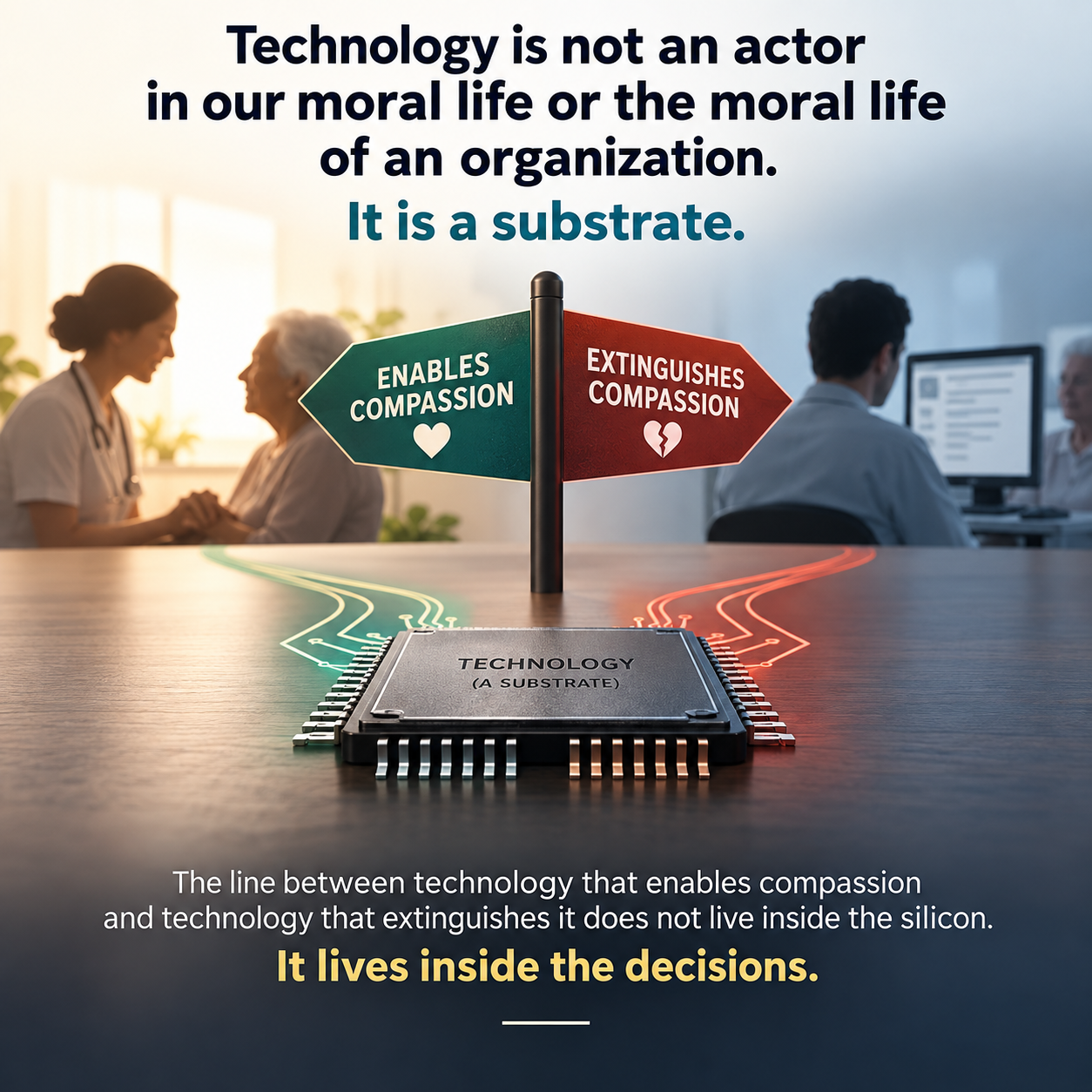
And what about the notion that when we assign the allocation of care resources to computers, we are removing human compassion from the system?
The potential is real. So is the possibility that implementation challenges, integration failures, and workflow disruptions could undermine the promised benefits. Clinical professionals should approach these tools with open-minded curiosity rather than either evangelical enthusiasm or dismissive cynicism.
The Trust Paradox
Healthcare data is uniquely sensitive. The Change Healthcare breach demonstrated that our protected health information can be compromised regardless of our consent. This reality creates a strange calculus: if our data can be leaked without permission, what is the risk-benefit analysis for sharing it intentionally with tools that might actually help us?
Anthropic has built its brand on safety and alignment research. Their acceptable use policy requires that a qualified professional must review content or decisions when Claude is used for healthcare decisions, medical diagnosis, patient care, or other medical guidance. They state that health data shared with Claude is excluded from model memory and not used for training future systems. Users can disconnect or edit permissions at any time.
These are the right policies. Whether they will be consistently enforced, whether they will survive competitive pressure to use data more aggressively, and whether they will protect against breaches or misuse remains to be seen. Trust in technology companies has been repeatedly broken. Rebuilding it requires demonstrated reliability over time, not just reassuring statements at launch.
The pragmatic position is to engage with these tools while maintaining appropriate boundaries. Use them for tasks where verification is straightforward. Avoid sharing information you would not want exposed in a breach. Monitor how the companies behave over time and adjust your engagement accordingly.
What This Means for Healthcare Education
Students graduating in 2027 and beyond will enter a healthcare system where AI-assisted documentation, prior authorization, and clinical decision support are standard practice. Our curricula must evolve to address AI literacy as a core competency.
This is not about teaching students to use specific tools that will be obsolete by the time they graduate. It is about developing the critical thinking skills to evaluate AI outputs, recognize limitations, and maintain the clinical reasoning abilities that AI is designed to augment rather than replace.
The therapeutic relationship remains irreplaceable. No AI can perform manual therapy, read the subtle nonverbal cues that indicate a patient is not being fully honest about their pain levels, or provide the human presence that is itself therapeutic. What AI can do, if implemented well, is remove the barriers that prevent clinicians from being fully present with their patients.
The risk is that we train a generation of clinicians who become dependent on AI assistance and atrophy the fundamental skills they need when the technology fails, produces errors, or is simply unavailable. Education must prepare students for both scenarios: a world where AI works as promised, and a world where it does not.
The Uncomfortable Truth About AI Reliability
Hallucination in large language models refers to the generation of content that appears plausible but is factually incorrect, fabricated, or disconnected from source material. In healthcare contexts, this failure mode is not merely embarrassing. It is potentially dangerous. A hallucinated medication dosage, an invented contraindication, or a fabricated clinical guideline reference could directly harm patients.
Anthropic acknowledges this limitation. Their demo materials include extensive disclaimers requiring biostatistician validation, clinical expert review, IRB approval, and legal sign-off before any AI-generated protocol can be used. These disclaimers are not legal boilerplate. They are a tacit acknowledgment that these tools are intended to accelerate drafting rather than replace decision-making.
The optimist notes that Anthropic emphasizes built-in safeguards against hallucinations and technical methods to reduce AI errors during production model training. Claude Opus 4.5 with extended thinking shows improvements in producing correct answers on honesty evaluations.
The skeptic notes that even Claude's FDA Elsa tool has been reported to hallucinate nonexistent studies. The skeptic asks: Why can't they just "fix" the problem? and realizes it's because the AI system is thinking for itself, and they neither fully understand it nor can they control it.
The pragmatist builds verification protocols regardless of which perspective proves correct.
Practical Strategies for Managing Hallucination Risk. First, never accept AI-generated clinical content without verification against authoritative sources, including drug references, dosing information, diagnostic criteria, and billing codes. Second, maintain human oversight at every decision point that affects patient care or reimbursement. Third, establish institutional protocols that define which AI outputs require mandatory review and by whom. Fourth, document AI involvement in clinical workflows so that errors can be traced and systems improved. Fifth, train staff to recognize the subtle signs of hallucination: overly specific details that cannot be verified, nonexistent citations, and confident statements about ambiguous clinical scenarios.
The promise of AI in healthcare administration is real, but so is the risk.
The organizations that will benefit most are those that deploy these tools with robust verification protocols rather than blind faith or blanket rejection.
The Numbers Behind the Promise: Comprehensive Chart Reviews
The Microsoft announcement accompanying this launch specifically mentions tools to support chart reviews and clinical decisions as part of Claude's documentation capabilities. Anthropic's own marketing states that answers can be traced back to the source, allowing clinicians to verify before acting. This source-linked extraction is exactly what healthcare professionals need.
But we need to examine the numbers honestly. Anthropic's internal benchmarks show Claude Opus 4.5 achieving 92.3% accuracy on medical calculations and 61.3% on complex agentic medical tasks. The optimist celebrates these as remarkable achievements for artificial intelligence.
The skeptic translates them into clinical reality: 92.3% accuracy means roughly one wrong answer in every 13 calculations. In medication dosing or risk scoring, the acceptable error rate with validated calculators is effectively zero. The 61.3% figure on complex tasks represents a 38.7% failure rate on multi-step scenarios.
What this tells us is that Claude functions as a capable drafting assistant that requires review, not an autonomous agent that can replace clinical judgment. For comprehensive chart reviews, this means AI can accelerate the synthesis of information across multiple documents, flag potential inconsistencies, and draft summaries that clinicians then verify. It cannot reliably make the final determination about what information is clinically significant.
Practical Implementation for Chart Review Workflows. First, use AI to aggregate and organize information from disparate sources, but verify all extracted data points against original documentation. Second, treat AI-generated summaries as first drafts that require clinical review, not finished products. Third, establish clear protocols for which chart review elements require human verification versus which can rely on AI extraction. Fourth, document the AI's role in any chart review process so that errors can be traced and workflows improved. Fifth, recognize that complex clinical reasoning, particularly around medical necessity determinations, remains a human responsibility.
Anthropic's own demo materials include extensive disclaimers requiring biostatistician validation, clinical expert review, IRB approval, and legal sign-off before any AI-generated protocol can be used. These disclaimers are a tacit acknowledgment that these tools are intended to accelerate drafting rather than decision-making. Organizations implementing chart review workflows should adopt the same posture.
Case Scenario: Where This Could Actually Help
Consider a physical therapist receiving a referral for a patient six weeks post-surgical repair of a tibial plateau fracture. The patient has been seen by the orthopedic surgeon, the hospitalist, nursing staff across two facilities, a home health physical therapist, and now presents for outpatient rehabilitation. The medical record contains dozens of notes across multiple systems. Somewhere in that documentation is the critical information: What is the current weight-bearing status, and how has it evolved?
Traditionally, the therapist would spend 20 to 45 minutes manually searching through operative notes, discharge summaries, home health documentation, and follow-up visit notes, hunting for every mention of weight-bearing status. Even then, there is no guarantee of finding all relevant entries, and discrepancies between providers often go unnoticed until they create clinical problems.
According to Anthropic's healthcare announcement, Claude is specifically designed to address this scenario. Their documentation states that answers can be traced back to the source, allowing clinicians to verify before acting. Claude reviews records and policies, then shows where the answers came from. This source-linked extraction is precisely what rehabilitation professionals need.
The Ideal Output. A comprehensive timeline of weight-bearing status documentation would include the date of each entry, the exact quoted language from the source document, the author and their credentials, and a direct reference to locate the original note.
For example:
December 1, 2025, Operative Note, Dr. Chen (Orthopedic Surgery): 'Patient to remain non-weight-bearing to left lower extremity for six weeks.'
December 15, 2025, Home Health PT Evaluation, Sarah Williams, PT: 'Patient currently NWB LLE per surgeon instructions, using front-wheeled walker.'
December 29, 2025, Orthopedic Follow-up, Dr. Chen: 'Radiographs show appropriate healing. Advance to toe-touch weight-bearing, progress as tolerated over next two weeks.'
January 5, 2026, Home Health PT Discharge Note, Sarah Williams, PT: 'Patient ambulating with TTWB LLE.'
Clinical Value Beyond Time Savings. This longitudinal view accomplishes several things simultaneously. It saves the therapist significant time in data gathering. It reveals the evolution of the weight-bearing prescription, which informs clinical reasoning about where the patient should be in their recovery. It exposes any inconsistencies in the record, such as a home health note from January 10 that still references non-weight-bearing status despite the surgeon's December 29 progression. And it provides exact quotes with source attribution, allowing the therapist to verify critical information rather than relying on AI interpretation.
The inconsistency detection is particularly valuable. When documentation from different providers conflicts, the therapist seeks clarification before proceeding. This is not AI making clinical decisions. This is AI surfacing the information humans need to make better decisions faster.
Verification Remains Essential. Even with source-linked extraction, the therapist must verify that the quoted text actually exists in the referenced document. The 61.3% accuracy rate on complex tasks means that nearly four in ten extractions could contain errors.
The therapist should spot-check at least the most recent and most clinically significant entries before basing treatment decisions on the AI-generated timeline. This verification step takes minutes rather than the original 20 to 45 minutes, representing a substantial workflow improvement while maintaining clinical safety.
Managing What Comes Next
The toothpaste is out of the tube. AI is now formally embedded in healthcare at the enterprise level, with the two largest AI companies competing aggressively for market share. For private equity-backed healthcare technology companies, this changes the workflow conversation entirely. For individual clinicians, it means developing literacy in tools that will increasingly shape their professional environment.
The organizations that will thrive are those that adopt neither blind enthusiasm nor reflexive rejection. They will pilot these tools in controlled environments, rigorously measure outcomes, build verification protocols before scaling, and remain willing to abandon approaches that do not deliver on their promises.
The individuals who will thrive are those who develop the judgment to know when AI assistance is genuinely helpful and when it creates more problems than it solves. This requires hands-on experience with the tools, honest assessment of their limitations, and the intellectual humility to update beliefs as evidence accumulates.
Is this Pandora's Box or the solution we have been waiting for?
The honest answer is that we do not know yet. The technology is too new, the implementations too varied, and the long-term consequences too uncertain for confident predictions. What we can do is engage thoughtfully, verify relentlessly, and maintain the clinical judgment that no algorithm can replace.
The question is not whether to engage with these tools. That ship has sailed. The question is whether we will shape their integration into healthcare or let them shape us.
The next 12 to 24 months will reveal which approach produces better outcomes for patients, clinicians, and the healthcare system as a whole.